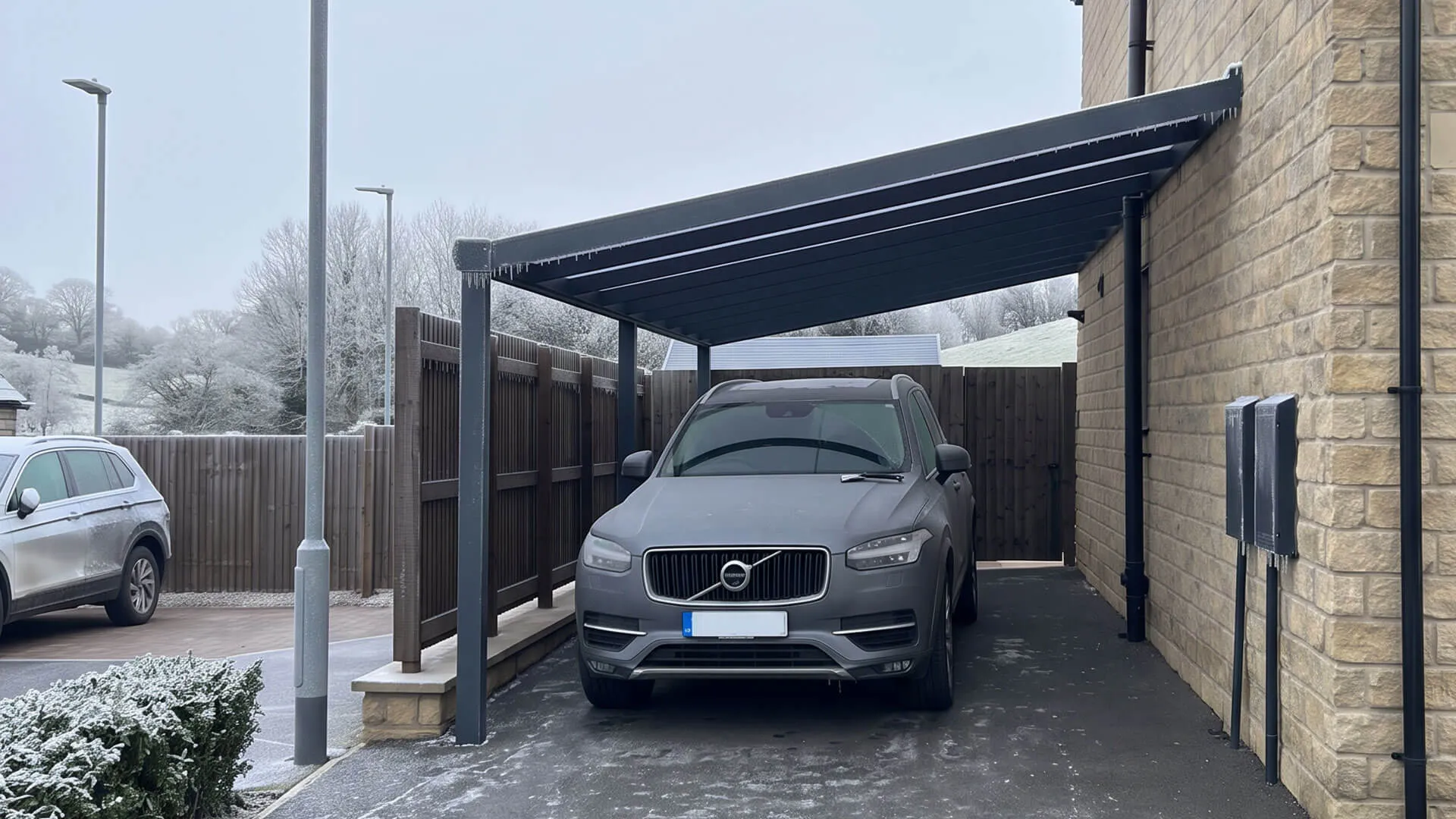
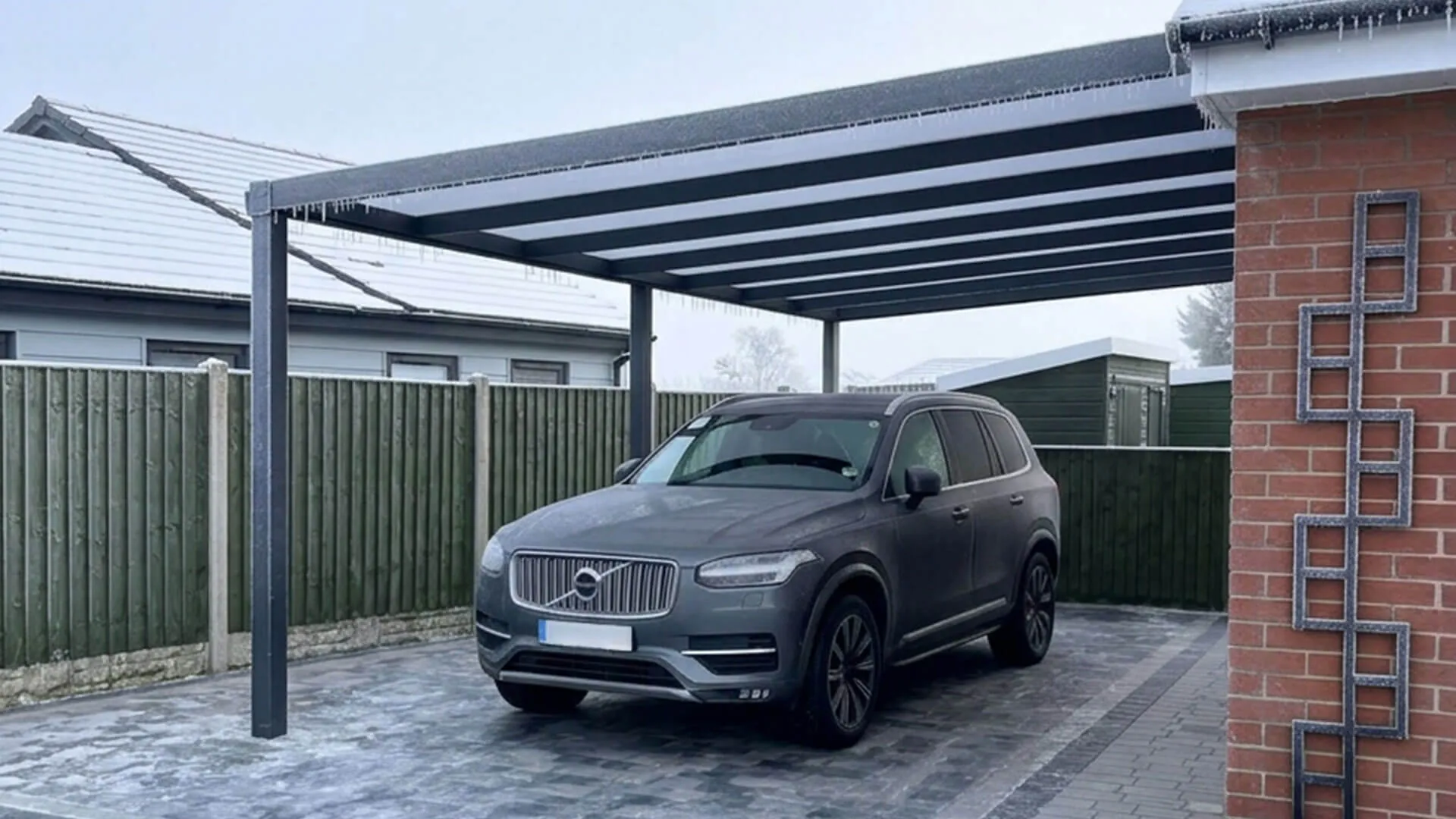
The Best Carport for Winter Weather

A Frost-Free Car Every Morning

Nobody wants to start their day standing out in the freezing cold on a bitter winter morning scraping ice off their car windscreen. A carport can lessen the chances of ice collecting on car windscreens when it’s built to handle sub-zero temperatures and large snow loads.

Our guide will explain more, breaking down how carports prevent frost, detailing different carport styles and discussing the best materials to keep cars and vans protected from winter weather.

Carports for winter

As an opener to the subject, here’s some answers to a few popular questions.

Q1: Does a carport actually stop frost forming on your windscreen, or does it just keep snow off?

Yes, carports can stop frost from forming on windscreens by offering a heat barrier. They reflect radiant heat back down towards a car, preventing moisture from freezing on the glass.

Q2: Which carport type is best for winter weather — a pitched roof carport, a free-standing arched carport, or a metal canopy?

A pitched roof carport is recommended for the winter climate because its steep angle naturally stops the collection of thick snow. A free-standing arched carport is effective in high-wind areas due to its curved shape efficiently shedding snow while enabling heavy wind to smoothly pass over the top. Metal canopies are liable to snow load failure if not engineered with high load ratings.

Q3: Where can a carport be installed, and does it need planning permission or a concrete base?

Carports can either be affixed to the side of a property or fitted as a free-standing unit on a driveway or garden area. Most carports satisfy permitted development rights, removing the need for planning permission. A concrete pad or secure concrete footings are advised to anchor the posts against heavy snow and winter wind loads.

Why Winter Mornings Cost You Time and Your Car Its Finish

We’re sure you’d much prefer a few more minutes in bed than getting up early on winter mornings to scrape ice off your windscreen, nor want to waste money on fuel as you heat your car to defrost it.

The catalyst for frost is radiant heat loss, occurring overnight as your car emits heat directly towards the night sky, resulting in the windscreen’s surface temperature dropping below the freezing point of the surrounding air. That’s when ice forms.

Left uncovered, any heavy snowfall or freezing rain that settles on your car can damage paintwork, sealants and components, causing corrosion and surface degradation. Whereas a car that sits underneath a protective structure is more likely to be kept dry and clear of ice, making it less likely to false start first thing.

Carports for winter

How a Carport Stops Frost Forming on Your Windscreen

It’s incorrect that a fully enclosed, heated garage is the only way to avoid ice on cars, as an overhead carport roof can keep them frost-free. Frost prevention works through two physical mechanisms:

  • Radiative Heat Retention: A carport offers a physical shield that traps thermal energy and reflects radiant heat back towards a car. A pitched roof carport, free-standing arched canopy or ready-made canopy keep a car windscreen’s surface temperature far warmer than it would be if exposed.
  • Condensation Interception: Absence of moisture prevents frost formation. A dry roof blocks airborne dew and moisture from settling on windscreens, side windows and wing mirrors, neutralising what ice crystals require to build.

Beyond De-Icing: What Else a Carport Shields Your Car From

Frost prevention is just one component of winter snow protection for cars. Installation of a robust carport will minimise exposure to snow, freezing rain and overnight moisture, stopping heavy ice crusts from locking down wipers, door handles and window seals.

This overhead shield helps to preserve the exterior surfaces of vehicles, offering a reliable weather barrier.

  • Paint, Glass & Trim: A carport will stop heavy snow accumulating on the roof and hood, protecting the paintwork, glass and trim from the micro-scratches caused by heavy snow weights and hard scraping. Headlights, rubber trim and underbody components are kept preserved too.
  • Corrosion Resistance: Structural frames constructed using coated aluminium or galvanised steel will remain rust-resistant while shielding the car’s undercarriage from slush and road salt.

Besides protecting cars from snow in winter, carports shield them from UV sun damage in summer, minimising the threat of paint oxidation, dashboard cracking and extreme cabin heat, and epitomising the versatility of carports.

Which Carport Type Is Best for Winter Weather

Carport selection for winter requires finding something that matches your property layout and suits the regional weather climate. Designs vary in terms of how they manage snow accumulation and direct wind site placement. Knowing the differences will help you narrow the options down.

Prior to choosing a roof shape, decide if an attached or free-standing structure works best:

  • Attached Canopies: Anchored directing to a home’s exterior wall, an attached canopy enables you to make a seamless transition from door to car and avoid freezing rain.
  • Detached Carports: A free-standing unit can sit anywhere on a driveway or outdoor grounds, affording you more placement flexibility and allowing snow to slide off the various sides without building up against a house.
Carport Type Best Winter Use Snow Shedding Wind Resistance
Pitched Roof Carport Heavy snowfall regions needing natural sliding clearance Excellent Very Good
Free-Standing Arched Carport High-wind locations, coastal areas, and mixed snow climates Good Superior
Freestanding Metal Carport Severe freeze zones, double-vehicle parking, maximum load ratings Superior Superior
Attached Polycarbonate Canopy Narrow driveways; quick house-to-car access during winter rain Moderate Good
Handcrafted Wooden Pergola Historic homes, custom aesthetics (with poly/metal roof panelling) Good Good

Carport Materials That Survive a British Winter

Carport strength is reliant on the material used. The right choice of frame material will keep it standing strong and looking good.

Frame Materials: Steel vs. Aluminium vs. Timber

  • Steel & Solid Steel: The structural integrity of heavy-gauge steel and solid steel is mightily impressive. Raw steel requires protective treatments to survive in wet British weather though.
  • Aluminium: While lightweight, aluminium possesses amazing strength, durability and weather resistance. Being rust-resistant also makes it an ideal low maintenance solution for damp coastal locations and combatting driving rain.
  • Timber: Wood’s natural aesthetic invariably complements gardens and architecture. However, a bespoke timber carport needs frequent attention to fend off rotting, warping, fungal growth etc., in the form of staining, sealing and repainting.
Carports for winter

The Extra Wins: Storage, Cost and Property Value

There are benefits to a carport that go beyond just keeping your windscreen clear of frost. It can offer a multi-purpose space, won’t require a huge outlay and provides several long-term returns.

All-Weather Storage & Versatility
Carports can offer a dry shelter against rain and snow for storing gardening tools, as well as cars, motorbikes and small boats. Some modern designs feature integrated storage sheds or side panels to cater for specific storage needs.

Low Construction Cost & Simplified Planning
As discussed in our carport vs garage article, it’s less costly to install a carport than construct a garage even though it offers lots of the same winter car protection benefits.

Another thing in favour of carports is they generally enjoy permitted development rights, making planning permission unnecessary, saving you time, money and possible red tape.

Kerb Appeal and Home Value
Introduction of a high-quality carport at home will increase its overall kerb appeal. The sleek frames, elegant finish and pristine lines of a professionally fitted carport can often improve property value and attract future home buyers.

Conclusion

Upgrading your home with a carport can cut the time spent scraping ice off your car. While it won’t actively heat a car, it acts as a thermal shield, disrupting radiative cooling and condensation cycles. By blocking heat escaping into the open sky and staving off dew on the glass, a carport can stop vehicles from frosting over on a cold winter morning.

Identification of the right carport entails a 3-step process:

1. Type: Choose between attached models or free-standing designs like pitched roof carports and free-standing arched carports.

2. Material: Elect to have enduring metal frames that use galvanised steel, powder-coated steel or aluminium to defy rusting, road salt and snow loads.

3. Configuration: Post heights, roof slopes and side panels should be aligned to the driveway layout.

Time is of the essence if you want a carport installed by Lakeland Verandahs before sub-zero weather reaches us.

Alongside our UPVC decking, we have a superb line in durable and stylish carports to explore and can undertake a carport installation for you.

Read what's going on at Lakeland Verandahs

Our blog is essential reading if you want to know about our latest product releases, current industry crazes, and gather some great recommendations.