
A louvered pergola is an outdoor aluminium structure with a roof consisting of adjustable and openable louvres that can be used to entice full sunlight, tilted for shade or create a watertight covering. It offers the weather control that you don’t get with a fixed or fixed-roof gazebo. Compared to fixed-roof pergolas, gazebos, and awnings, a louvered pergola exceeds in flexibility and comes with both manual or motorised operation. Our article on what is the purpose of a pergola has more.
Louvered Pergola Buying Guide: How to Choose the Right One
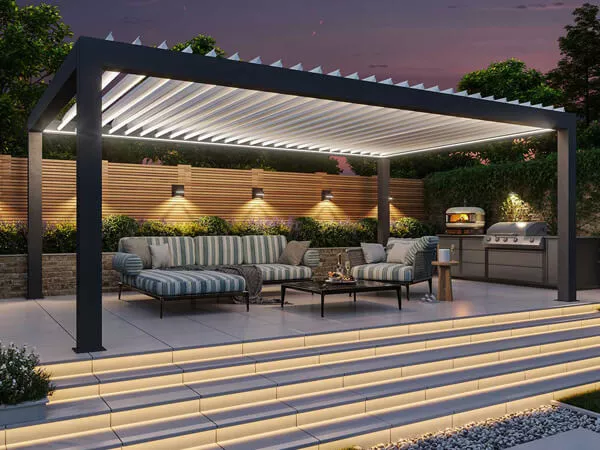
| Louvered pergola prices UK comparison guide (3-stars cheapest: 5-stars most expensive) | ||
| Entry-level models | Mid-range models | Large, motorised models |
| ⭐⭐⭐ | ⭐⭐⭐⭐ | ⭐⭐⭐⭐⭐ |
We’re going to compare louvered pergolas on roof adjustability, weatherproofing effectiveness and pricing to help support you in choosing whether manual or motorised operation best suits your budget and functional needs.
If you’re a first-time buyer of a louvered pergola, you’ll probably be keen to learn about exactly what weather protection it offers, how it operates and the value of owning one. Our guide will give you the answers to all of that, going into the differences between manual and motorised systems, while highlighting notable features. Here’s a few quick answers to key questions as a start point.
Q1: What is a louvered pergola and how is it different from a traditional timber pergola?
A louvered pergola is crafted out of aluminium and has adjustable louvres that you can open, tilt or close to control sunlight, shade and rain. As opposed to a traditional timber pergola with a fixed or open roof, a louvered pergola provides greater protection from the elements when the louvres are closed. We’ve also previously compared a veranda vs pergola.
Q2: Should you buy a manual or a motorised louvered pergola?
Manual louvered pergolas cater for lower budgets and those seeking simple operation. Despite their higher cost, motorised louvered pergolas give you the convenience of instant adjustment if you prefer the option of being able to adjust the roof as and when you like (with easier access and more subtle aesthetics to control this).
Q3: Is a louvered pergola actually watertight, and does it need planning permission?
The most effective rain protection occurs once the adjustable louvres in a quality louvered pergola are fully closed, with the overlapping louvres, seals and integrated drainage helping discard rainwater. The cover from the elements largely depends on the size of louvre / type of seal / quality of the aluminium structure etc.
Normally, it falls under permitted development rights, granting exception from planning permission, but it’s worth confirming this with your local planning authority before installation.
What a Louvered Pergola Is and How the Roof Works
A louvered pergola is an outdoor structure, with a roof composed of adjustable slats or louvres. In an open position, the louvres maximise sunlight, promote airflow, offer shading and open sky views, while in a closed position, their overlapping creates a more enclosed covering for rain protection.
Sometimes a louvered pergola is referred to as a louvred pergola, bioclimatic pergola, louvred roof system or aluminium garden pod. Online searches may also bring up results for motorised louvered pergolas and motorised louvres. Any spelling difference between ‘louvered’ and ‘louvred’ is due to regional differences, but they’re basically the same.
How smoothly the roof adjusts, seals and copes with rainfall will come down to the quality of the louvre system.
Louvered Pergola vs the Alternatives
A louvered pergola gives you a middle ground between an open pergola and fully enclosed outdoor space, providing the adjustable control that they can’t. You can use the louvres to switch from open sky to total shade, and when shut, benefit from excellent rain control. Open-slatted timber pergolas have largely been superseded by louvered pergolas because people want to have control over the weather and not let it disturb their outdoor enjoyment. A few of the alternatives follow and reading up on conservatory vs pergola vs veranda may also prove useful.
● Traditional timber pergola
A traditional timber pergola is highly affordable and simple. While the fixed crossbeams provide permanent shade, there’s no facility to adjust the roof in the event of glare or rain. If you’re happy to sacrifice controllable weather protection and want something straightforward and low-cost, a traditional timber pergola makes a good choice.
● Retractable fabric canopy
A retractable fabric canopy is a hugely flexible option as you can extend the fabric for shade and retract it when wanting an open sky. But it has limitations, particularly during periods of heavy rain, and its longevity is much shorter than a robust louvered roof. Select a retractable fabric canopy for lighter shading than you’d get with a solid, adjustable roof.
● Fixed roof structure
It may not have the mechanical components of a louvered system, but a fixed-roof structure creates a permanent shelter. The downside is that a fixed roof won’t give you adjustable control for sunlight, shade and ventilation. When comfortable with forgoing adjustable roof control and content to have a permanent, stylish shelter, explore a premium fixed structure.
Sizing, Height and Configuration
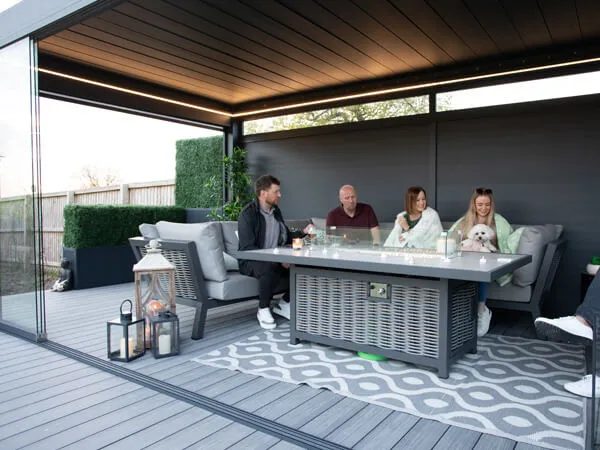
Furniture and activity preferences will inform what louvered pergola size is best – don’t just buy the biggest pergola you can fit in your garden. Typical louvered pergola sizes include 3×3m, 4×3m and 6×3m: a 3x3m structure befits a compact seating set or small dining table, with 4x3m increasing space for a larger seating or dining layout. A 6x3m louvered pergola is enough for separate dining and lounge zones if you favour having combined dining and seating areas.
A standard pergola height usually has around 2.2-2.5m of clearance, but it can vary depending on the system and installation requirements. Larger motorised louvered pergolas can reach about 7m x 4.5m.
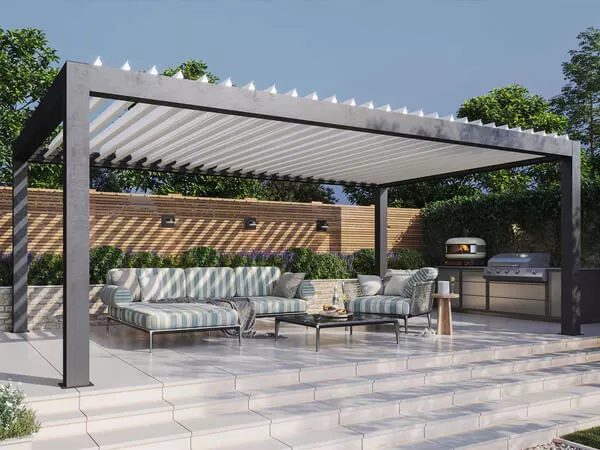
Configuration will be influenced by the installation location. On a patio, UPVC decking, or outdoor terrace, pergolas can be positioned to extend existing living or dining areas, while on a lawn, there’s capacity to have a more freestanding configuration. In bigger gardens, a louvered pergola can create a defined garden room, dining space or outdoor kitchen separate from the house. We recommend including a UPVC decking setup to help provide stable grounding underneath and to enhance the aesthetic.
Weather Performance: Drainage, Wind and Year-Round Use
Much of the appeal of a louvered pergola is the outdoor shelter it provides from the sun and rain and its efficient adjustability. Closure of the adjustable louvres results in a roof surface that helps stop water coming through. First-rate systems have a combination of sealed louvres, supporting beams and an integrated drainage system to gather water and remove it through concealed channels and downpipes so that seating areas are kept protected. The amount of weather protection offered is reliant on drainage and a weatherproofing design. Integrated guttering and drainage systems stop pooling on the surface. Well-made aluminium louvered pergolas with tough components, well-maintained seals and effective drainage can endure for years.
In exposed gardens and coastal locations, wind performance needs consideration. A quality louvered pergola is engineered to withstand very strong winds. To what extent hinges on the model, installation standard and anchoring of the structure. Consider the additional load placed on the roof if heavy snow occurs and keep on top of maintenance: clear leaves and debris from gutters, channels and drainage outlets, monitor moving parts, and ensure the drainage-system is free-flowing.
Buying Checklist: Suppliers, Warranty, Planning and Installation
Choosing a design and size are only two elements of buying a louvered pergola; there’s also things like the supplier you appoint and louvered pergola installation quality to think about. Find a supplier and installer with a proven track record, like Lakeland Verandahs, who’s able to supply clear product specifications, customer references, evidence of project work etc.
Ask for details of the warranty given and check it over closely. Also, find out if the pergola will be subject to planning, as not all pergolas conform to permitted development requirements, such as if they exceed a certain height or size, intrude on boundaries, or are earmarked for installation at a listed home or property in a conservation area.
Conclusion
Homeowners often look to a louvered pergola ahead of a fixed or fabric alternative because of the control it grants them. In seconds, you can go from open sky to useful shade, and close the roof when rain falls so that it doesn’t halt outdoor living.
Specification is a critical component of the buying process, as you need a quality aluminium frame, well-constructed louvres, a choice between manual and motorised operation and the right size. Put all these ingredients together, along with a powder-coated aluminium finish, and you have a louvered pergola that’s easily maintained and will reward you with years of outdoor use.
Secure a louvered pergola from Lakeland Verandahs, your local pergola and decking installer.
Read what's going on at Lakeland Verandahs
Our blog is essential reading if you want to know about our latest product releases, current industry crazes, and gather some great recommendations.