
Summer’s arrival may have inspired you to plan a garden upgrade, but maybe you’re unsure as to whether to uplift the space with UPVC decking or artificial grass. There are benefits to both and they’ll transform its look and feel differently. Our guide will go into that, comparing the two options to help you figure out which is the best option. Here’s a summary of key takeaways to start things off.
Decking and Artificial Grass: Which Is Best?
Decking and Artificial Grass: The Complete Comparison Guide for Your Garden
Q1: Is artificial grass or decking lower maintenance?
UPVC decking and artificial grass are equally a great deal easier to maintain than natural lawn. Whilst timber decking relies on frequent staining or sealing to retain its appearance and condition, UPVC decking requires minimal effort to preserve.
Q2: How long does artificial grass last compared to decking?
When cared for, artificial grass lifespan is about 10-15 years, while UPVC decks have the potential to endure for 20-30 years or more (a minimum of 10 years in accordance with the comprehensive warranty of this particular decking installer – Lakeland Verandahs).
Q3: Should I choose artificial grass or decking for children, pets, and entertaining?
The softness of artificial grass is appreciated by families with children and pets, while decking is a perfect location for external dining and entertaining. It’s no wonder then that some choose to combine the two solutions.
Decking and Artificial Grass: Two Low-Maintenance Garden Surfaces
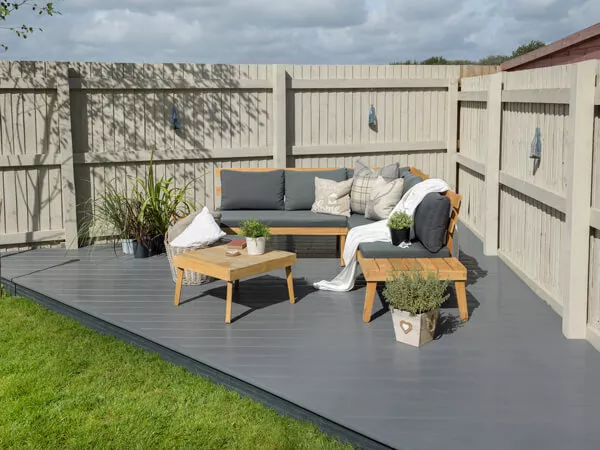
Artificial grass and decking, together with paving, shape up as being amongst the best alternatives to a traditional lawn, requiring significantly less upkeep.
Modern artificial turf is produced from durable synthetic fibres attached to a sturdy backing using advanced polymers and then fitted over a carefully prepared base. Meanwhile, decking is built from UPVC, wood or composite boards affixed to a supporting frame.
Personal requirements dictate which to invest in, such as how you intend to use your garden, what your budget is, and how much maintenance you’re committed to doing.
Maintenance Comparison: Artificial Grass vs Decking
One of the biggest draws of artificial grass and a decking layout is how little attention they need.
There’s no mowing, watering, fertilising etc., involved in preserving fake lawn and it generally only requires the odd bit of rising and an infrequent wash down.
Decking maintenance comes down to the chosen material. Timber decks are the most time-intensive to preserve and can end up needing much repair and replacement over time. UPVC deck surfaces can largely be left alone and just need the odd bit of clearing, sweeping, washing and rinsing.
Cost Comparison: Artificial Grass vs Decking vs Paving
In most instances, decking is the cheapest of the three to install, and because it doesn’t require the groundwork, materials and labour that a paving installation does, it can often be fitted more quickly and easily than paving. Alas, paving comes out as the most expensive option. Artificial grass isn’t much cheaper than paving.
Installation standards and product quality will affect the price. Running costs are lowest though for artificial grass and UPVC decking, with decking cost normally being the cheaper of the two.
Durability and Lifespan: How Long Do They Last?
When it’s well looked after, well-made, and well-installed, artificial grass has a lifespan of around 15 to 25 years. Low-quality artificial grass can prematurely break down.
UPVC decking comes with a possible lifecycle of 20-30 years, whereas timber decking, especially softwood designs, can be rather short-lived if weathering is allowed to settle and fester.
How UPVC Decking Outlasts Timber
UPVC decking can often resist the elements better than timber deckboards, isn’t susceptible to rotting and offers more reliable weatherproofing. Because it is normally made from recycled plastic, its lifespan is typically longer than wooden boards.
Timber decking fares badly in our climate. Unless given routine maintenance, wood can absorb moisture, causing it to swell, crack and suffer wear and tear.
Lifestyle Fit: Which Surface Suits Your Garden?
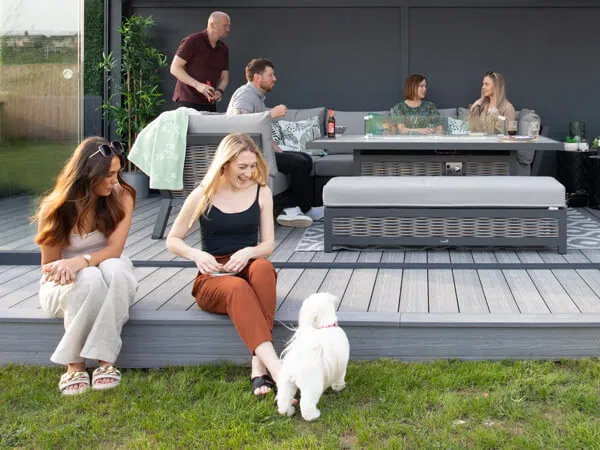
In households with children and pets, artificial grass is a fine choice. They can play without danger, and artificial turf keeps a lawn looking pristine all year round. Very little effort needs committing to fake grass maintenance as it can retain its kerb appeal without repeated upkeep.
If entertaining and outdoor living is your thing, decking is a more suitable fit. Equally decking can help provide ease of access and a continuation of living from indoors. On a raised deck, you can also enjoy engaging views. Well considered decking shapes add an exquisite touch to homes and enhance their value, while introducing lots of new liveable space.
So basically, decking superbly caters for entertainment and lifestyle-focused gardens.
Appearance and Seasonal Looks
Artificial grass will display a vibrant green colour through each season, much like a freshly cut lawn, but minus the upkeep. Additionally, it blends in well with plant beds, garden borders and colourful pots. Each winter though, as some plants die off, it can end up emphasising the obvious fakeness of the grass.
Decking exhibits a very contrasting look, one that’s clean with a structured finish to define the area. It also provides a much wider variety of colour options.
Fundamentally, artificial grass will be to your taste if you want constant greenery, while decking will have greater appeal when a more architectural aesthetic to complement a modern or traditional garden is sought. That hopefully gives you a lucid explanation of garden surface comparison.
Styling Decking for a Modern Garden
For the ultimate modern external setting, UPVC decking offers an immaculately structured aesthetic that can be bespoke and tailored to match beautifully with any outdoor space.
Add personalised touches to UPVC decks, like a two-tone finish, if you need some garden decking ideas. Details of this kind can transform a plain deck into something more visually stimulating and suited to relaxing and entertaining.
Decking can also accommodate requirements for elevated decks and multi-level patios and entertaining areas, and incorporate built-in stairs, lighting etc., for amplified character and functionality purposes.
Conclusion
Artificial grass and decking are superb low-maintenance garden options. The better of the two will come down to how you wish to use your outdoor space. A paving alternative is practical in many situations, but artificial grass more suits those wanting a hassle-free lawn. Decking, on the other hand, satisfies homeowners who love to entertain, dine outdoors, extend their living space or enjoy elevated views.
Let the following three factors guide your decision on artificial grass vs decking: what your budget is, how much upkeep you’re prepared to put in, and how you intend to use the space. This will help you choose the surface that offers the finest balance of appearance, robustness and enduring value.
You may well find that combining the two surfaces works best – pairing artificial grass with a decked seating area would create distinct zones for playing, relaxing and entertaining.
If your mind is firmly set on having decking installed, request a quote for it from Lakeland Verandahs and let’s begin discussing deck landscaping ideas.
Read what's going on at Lakeland Verandahs
Our blog is essential reading if you want to know about our latest product releases, current industry crazes, and gather some great recommendations.