
Your outdoor space at home can be spectacularly transformed by choosing the right decking colour, sure to uplift its style, give it an inviting look and marry it to the house. If stuck on what shade to pick, unsure of whether grey decking would be a good option or just hunting for inspiration, this guide has you covered and is packed with garden decking ideas. In it, we discuss some of the most popular and best decking colours, advise how they align with different surroundings, and provide guidance on shade selection.
How to Choose the Right Decking Colour for Your Home and Garden
Decking Colour Ideas
Q1: What is the most popular decking colour?
Grey decking has emerged as an overwhelming favourite in recent times, appreciated for effectively balancing contemporary aesthetics with typical environments. The neutrality of the tone conforms to various materials and outdoor space configurations.
Q2: How does my home style influence which decking colour I should choose?
Modern homes often suit grey decking, notorious for establishing a sleek, minimalist aesthetic, while traditional and heritage properties befit the warmth of wood-like tones. Matching or complementing the look of external materials and landscaping ensures visual unity.
Q3: Do lighter or darker decking colours work better on south-facing decks?
For south-facing decks, darker colours absorb more heat and can therefore become warm when exposed to direct sunlight, with lighter shades reflecting sunlight to provide greater comfort underfoot.
Decking Colour Families — A Complete Palette Overview
To get your head around colour families, it’s helpful to learn about some of the available finishes. Within the main colour family categories are options like grey, brown, and white, with grey decking regarded as the most versatile solution for contemporary outdoor spaces.
Every colour family has a tonal range:
- Grey decking – varies from light silvery hues to intense charcoal shades. Characterised as modern and versatile, as well as neutral and flexible, it’s a prudent option for just about any outdoor setting.
- Brown decking – shades extend to hues like light oak and dark walnut, which have an immense warmth and richness about them. Mid-tone browns often convey golden or reddish hues for a comforting and classic aesthetic.
- Black decking – dramatic and brilliantly contrasting, especially when used as a contrast to greenery or light-coloured furniture.
- White and off-white decking – initiates an airy space and usually paired with pale greys or soft blues if a coastal-type theme is sought.
- Beige and neutral tones – a middle ground between grey and brown, delivering restrained elegance and effortlessly merging into a medley of house exteriors.
Grey and Neutral Tones - The Most Versatile Choice
Grey decking is far and away the favourite choice, consistently featured in decking inspiration guides and trend pieces. The flexibility of grey is a catalyst behind its popularity, working gorgeously with a broad range of house styles and promising a clean, enduring look that will stay fashionable.
It’s easy tailoring grey decking to match your space and decking layout. Light grey tones, such as muted silvers and pale greys, greatly lift areas, with mid-tone greys managing to reconcile warmth and neutrality.
Cool greys initiate a refreshing contemporary edge, and those at the darker end of the scale, add depth and contrast. Dark grey often gets mentioned in conversations revolving around the most popular decking colour trends.
There are parallels between Scandinavian minimalism, contemporary residences and grey decking. Lighter greys go wonderfully with natural wood furniture and soft textiles when seeking to accomplish a relaxed Nordic ambience, while darker grey decking helps to make surrounding green plants come alive, a perfect visual contrast in garden locations.
Brown, Black - Expanding Your Palette
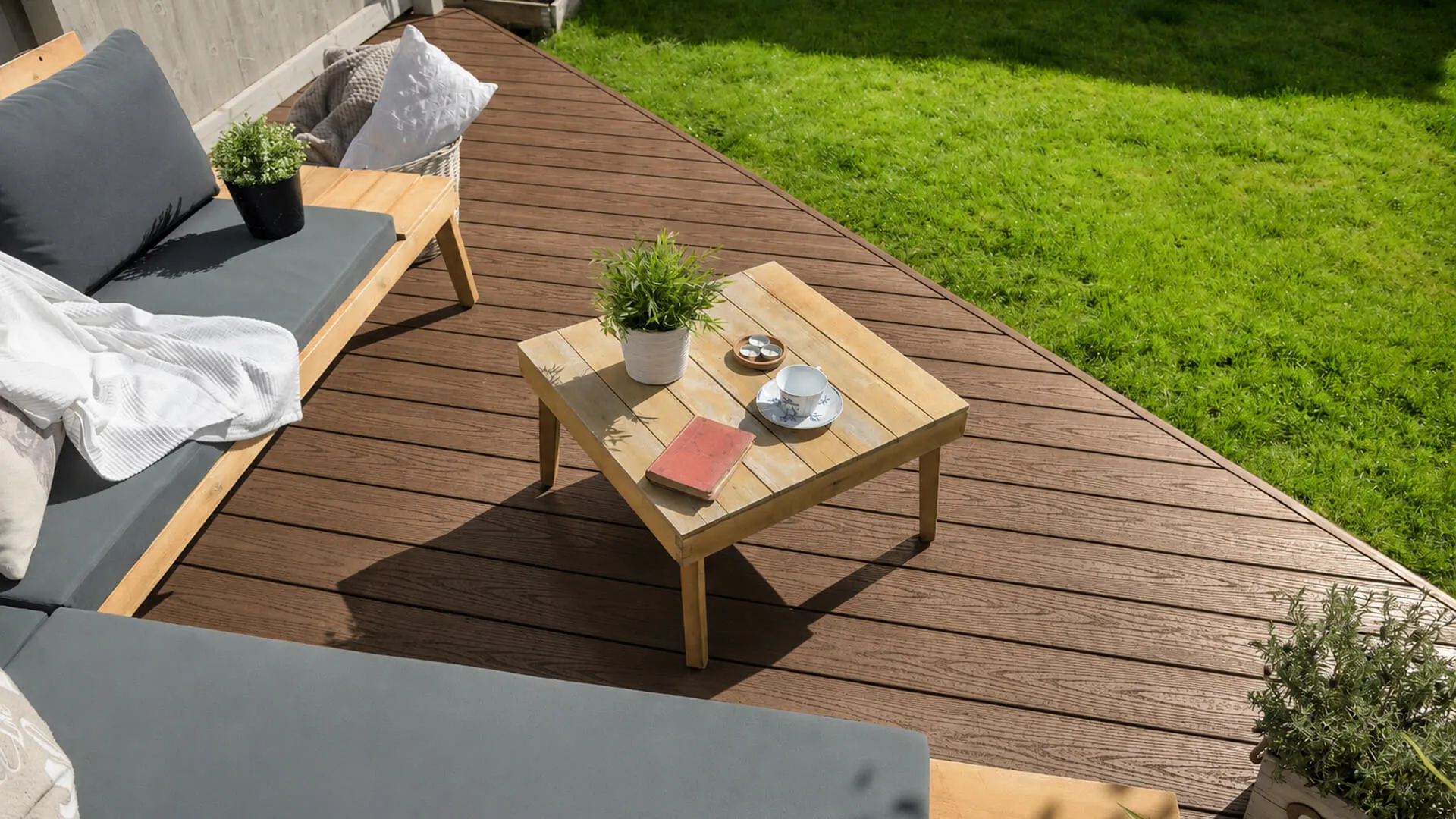
Shifting away from grey, the colour families of brown and black decking provide a contrasting style to wholly transform your outdoor space. Brown decking is well-liked by those seeking warmth and natural character. Shades can encompass golden brown and darker brown hues like walnut, which deliver rich tones for a grounded and inviting feel. Considered rustic and timeless, brown decking complements traditional gardens, countryside dwellings and spaces where a wood-inspired aesthetic is desired.
Conversely, black decking is bolder and incredibly impactful, while also being sophisticated and sleek, thus, it generally suits modern and architectural outdoor designs. Be aware of darker boards absorbing extra heat, which may pose an issue if installed south-facing. They pair seamlessly with light walls, metal finishes and clean lines.
Matching Decking Colour to Your Home Style
Personal taste will obviously influence choosing the right deck shade, but your home’s style also ought to be a factor in what’s chosen. The best designs have a decking colour that successfully co-exists with siding, trim and roofing so that everything is balanced and consistent.
You’ll find that different styles automatically pair with certain colour families, helping make pinpointing a suitable option easy:
- Coastal homes naturally suit soft greys, weathered tones, whites and cool blues.
- Rustic homes profit from decking that’s warm and earthy, finishes such as rich browns, golden tones and wood-inspired tones.
- Modern and minimalist homes are best off with clean, unfussy palettes, provided by the likes of different greys, and neutral tones.
- Contemporary homes and Scandi spaces befit mid-tone greys, cool greys and restrained palettes for that modest yet distinguished look.
An aptly chosen deck colour will see that your indoor and outdoor spaces are harmonious, amplify your home’s character, underline its standout features and bring everything together.
What Mood Does Each Decking Colour Create?
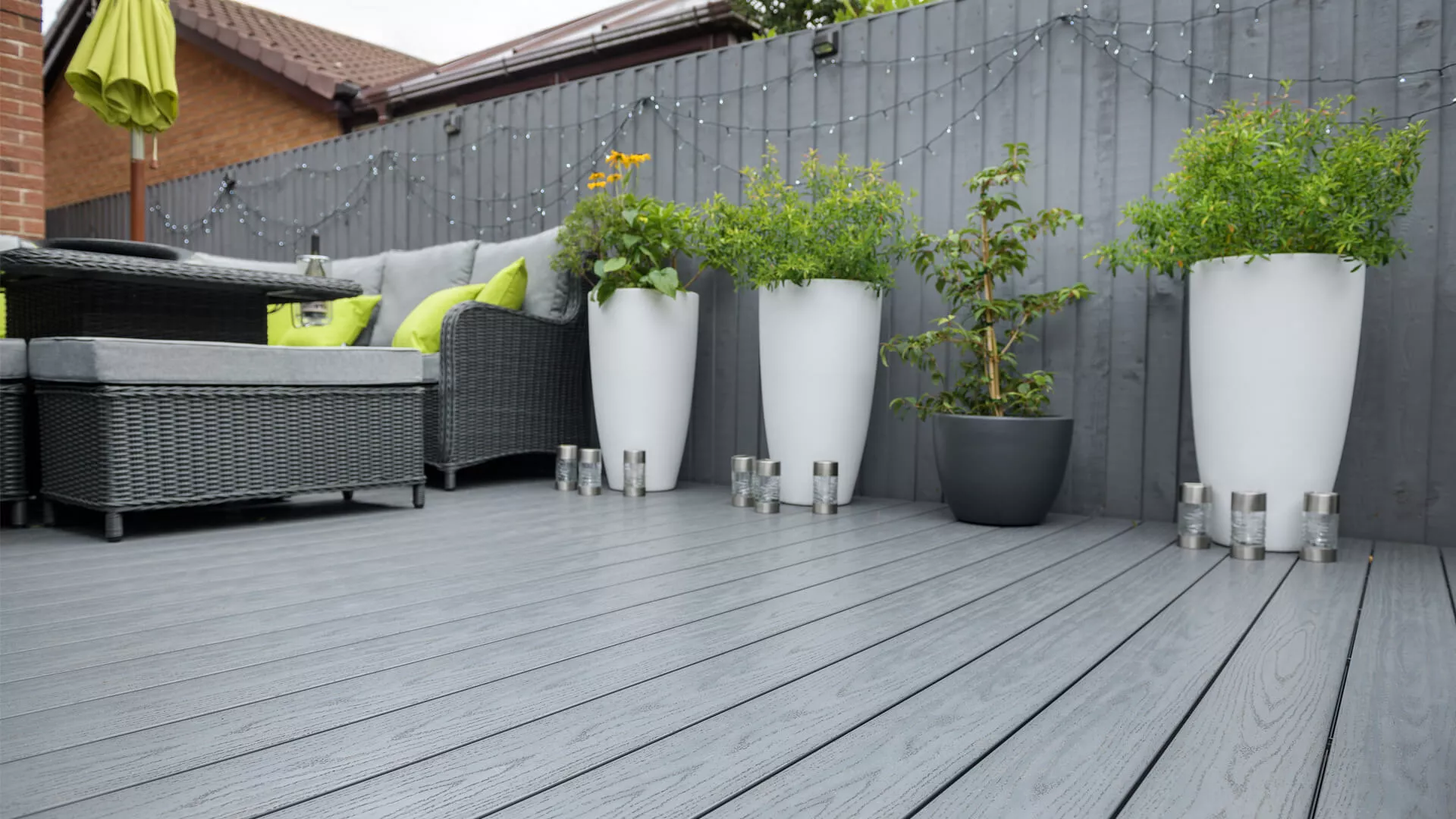
Grey decking is renowned for exuding a cool and calm feel, creating a relaxed atmosphere that helps you decompress. Brown hues initiate a rather different mood, adding warmth and character for an inviting and grounded feel. For depth, contrast and a dramatic impact, explore darker UPVC decking.
Light and dark shades can also affect space perception. Colours on the lighter side of the spectrum help make spaces feel more open due to how they reflect light, ideal for compact gardens and shaded areas. On the other hand, darker shades leave spaces feeling intimate and defined. In the case of dark grey decking, it underlines plants and lawns in green spaces. Pair white decking with black fencing for a stark visual contrast and monochrome effect.
How Your Outdoor Space Affects Decking Colour Choice
When assessing decking colours, consider how each potential hue will respond to sun exposure, garden landscapes, decking shapes etc. and their influence on its look and performance.
How a colour reacts to light is a fundamental point. South-facing decks attract the most sunlight, so it can cause darker deckboards to become hotter underfoot in the summer months. In this scenario, it may be worth leaning towards lighter deck colours for a cooler platform when exposed to sunlight.
Available space also comes into it. Lighter tones typically work well in smaller yards and gardens, opening them up visually and making them seem spacious. Darker shades suit larger garden layouts, transforming expansive locations into intimate-feeling havens.
Lastly, contemplate the surroundings. Emphasise planting in lush, green spaces with cooler greys and darker tones. For coastal settings, stick to lighter shades, weathered greys and soft neutrals to prompt a breezy, relaxed vibe. Colour choice should also hinge on what outdoor décor you have and how you intend to use the space.
Design Techniques for Using Decking Colour Creatively
A two-tone layout is a styling strategy where you combine complementary shades e.g. light grey with charcoal or beige with brown, for striking design. Zoning with colour is another technique, designed to define areas within a deck without barriers.
Other approaches include the incorporating of picture-frame edges, which is basically a contrasting border around a deck’s perimeter.
A hot trend of 2025, this statement border thrives in contemporary look and modern feel designs, with the subtle contrast amplifying overall aesthetics.
Also, select tones that harmonise with any balustrades, fencing and planters to bring the whole look together, while also ensuring they coordinate with furniture and outdoor décor. To illustrate the point, grey decking provides a perfect neutral backdrop for furniture and décor.
Conclusion
Consider the following three factors to unearth the right decking colour ideas: your personal style preferences, your home and outdoor space’s characters and any practical concerns, such as sun exposure. Whichever is best will be the one that caters for all these things and seamlessly fits in with the environment.
Grey remains king for its versatility and cool and calm appeal, but offerings like brown are fantastic at introducing warmth and personality. Two-tone layouts are a further route to personalisation.
Be alert to the fact that home kerb appeal can be strongly influenced by decking colour and it’s capable of increasing a home’s resale value too. If you want a safe colour choice with broad appeal, we suggest selecting neutral and classic tones.
As a well-established decking installer with thousands of installations under our belts, Lakeland Verandahs can offer sound advice on colour if needed.
Read what's going on at Lakeland Verandahs
Our blog is essential reading if you want to know about our latest product releases, current industry crazes, and gather some great recommendations.